
Knowledge - 10
Swiss Cigarettes Without Additives.
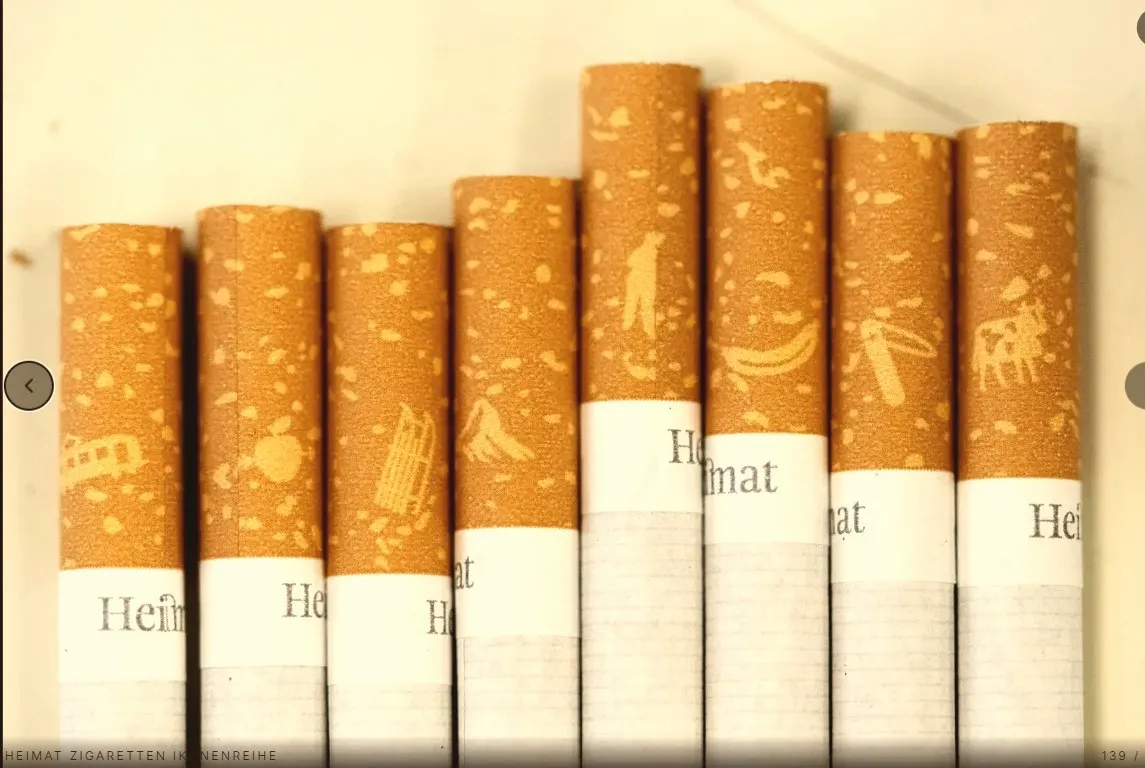
Industrial cigarettes can contain up to 600 approved additives - from flavours and humectants to burn accelerants and saltpetre compounds. Heimat Original deliberately uses none of them. Every Heimat cigarette contains pure, unprocessed Swiss tobacco, a cellulose filter and cigarette paper - nothing else. This page explains what that means in practice and how to recognise an additive-free cigarette.
Definition
A cigarette without additives contains only tobacco (leaf and stem), cigarette paper and a filter. No flavours, no humectants such as glycerine or propylene glycol, no burn accelerants, no saltpetre or binders inside the rod. Heimat Original produces along this principle - the tobacco is grown in Switzerland (Broye Valley, Lake Constance), fermented naturally and processed unflavoured.
01
What does 'cigarette without additives' mean?
The term is not legally protected - so it has to be defined precisely. At Heimat it means: nothing but tobacco, paper and filter.
A cigarette has three components: the tobacco rod, the paper, the filter. In industrial production all three are chemically optimised. The rod usually contains flavours (cocoa, liquorice, menthol, vanilla, sugar syrup), humectants (glycerine, propylene glycol), binders and often so-called 'sheet tobacco' - reconstituted tobacco from stems and dust, glued with cellulose binders.
'Without additives' at Heimat means: we leave out all four categories. No flavour. No humectant. No binder. No sheet tobacco. The rod is pure cut Swiss tobacco - Burley and Virginia from the Broye Valley and Lake Constance, air- and flue-cured the classic way, naturally fermented. The paper is unbleached, the filter is pure cellulose.
Important context: 'without additives' is not the same as 'healthy' or 'harmless'. Tobacco smoke contains harmful combustion products even without additives. Heimat makes no health claims - we make a craft decision about the product itself.
Pure tobacco, paper, filter - three components. Everything else is industrial optimisation.
02
Why do other brands use additives?
Additives are not accidental. They make the product cheaper, more uniform and more accessible to many smokers - every concession has a commercial reason.
Industrial tobacco production processes huge volumes of leaf from many origins. Every batch has different moisture, sugar and aroma. Flavours and humectants smooth out these swings - the end product tastes identical over years, regardless of harvest. Essential for global brands. Not for a small manufacturer like Heimat.
Humectants like glycerine and propylene glycol keep the tobacco from drying out in the pack, extending shelf life and enabling global logistics. They also change burn behaviour and generate additional aldehydes during combustion. Heimat avoids them, accepting shorter post-opening shelf life and smaller batches.
Flavours (cocoa, honey, menthol, vanilla, sugar syrup) mask bitterness and soften the smoke - especially for beginners. Heimat lets the tobacco taste like itself: earthy, herbaceous, with the natural character of Swiss Burley and Virginia. Not for everyone - but honest.
Flavours mask. Humectants preserve. Binders stretch. We leave all three out - and accept the consequences.
03
How Heimat produces without additives in practice
Building a cigarette without additives is more demanding than the industrial version. Every step must trust the tobacco itself - there is no chemistry to hide mistakes.
The tobacco comes from Swiss farms - Burley and Virginia from the Broye Valley (Vaud/Fribourg) and Lake Constance (Thurgau, St Gallen). After harvest it is air- or flue-cured the classic way, then naturally fermented. Unlike industrial fermentation with sugar, nitrogen or acid additions, ripening relies solely on enzymes and microbes already present in the leaf. It takes longer, is climate-sensitive - but the result is tobacco that has become only itself.
At the manufacture in Steinach the fermented tobacco is cut by variety and blended to the Heimat recipe. No sauce, no flavour spray, no glycerine tank. The rod is rolled, wrapped in unbleached paper, fitted with a cellulose filter. Done. The entire production line has fewer stations than at industrial producers - because less is added.
Quality control without additives means: inspection of raw leaf, taste check after fermentation, cut sample, burn test of the finished cigarette. If a batch is off, it isn't corrected with aroma - it goes back or is used differently. This discipline is the basis of an honest cigarette.
04
How does an additive-free cigarette taste?
If you're used to industrial cigarettes, you taste the difference at the first draw with Heimat. Less sweet, less perfumed, more leaf.
Industrial brands work with flavours that give the tobacco a specific 'brand note' - a sweetness, a cocoa-like depth, a warmth in the throat. If you're used to it, you initially miss it. A Heimat cigarette tastes directly of what it is: dried, fermented tobacco leaf from the Swiss Mittelland.
The aromas that remain come from the leaf itself: earthy, with a light herbal note, some hay, woody in the finish. Bodensee Burley brings a finer, slightly cooler tone, Broye Virginia a warmer, mildly sweet depth - all natural, nothing added.
Many Heimat smokers describe the switch as 'the cigarette tastes like tobacco again'. Subjective, but that is the entire point of the product philosophy: make the leaf the actual flavour, not a carrier for chemistry.
A Heimat cigarette tastes of tobacco - not of cocoa, not of vanilla, not of 'brand'.
05
How to recognise additive-free cigarettes
There is no mandatory label for 'without additives'. Still, several reliable indicators help identify an honest cigarette.
First: the ingredient declaration. Manufacturers producing without additives typically list this transparently on the pack, in the insert or on their website. Heimat states it on the side of the pack and on heimat-original.com. If a manufacturer discloses nothing, that's a sign of additives.
Second: burn behaviour. Industrial cigarettes often burn through evenly when left in an ashtray - thanks to burn accelerants in the paper. An additive-free cigarette goes out if you don't actively draw on it. A simple, visible test.
Third: the smell of the unopened pack. Industrial cigarettes often smell of cocoa, honey or vanilla - aromas that diffuse through the foil. A pure tobacco cigarette smells of dry hay and tobacco leaf, nothing more.
06
What Swiss law says about additives
Switzerland regulates tobacco additives - but a surprising amount is allowed. 'Without additives' is therefore a conscious manufacturer decision, not the legal default.
The Swiss Tobacco Products Act (TabPG, in force from 2024) permits many additives provided they appear on a positive list and are used in declared quantities. Flavours, humectants and combustion aids are generally allowed. Only characterising flavours (menthol, fruit, sweets) are banned in conventional cigarettes - an EU-aligned rule applied in Switzerland from 2026.
In practice: a cigarette can legally contain hundreds of additives in Switzerland, as long as none of them is a 'characterising flavour'. A tobacco with cocoa, honey, glycerine and saltpetre is perfectly compliant. Buyers wanting cigarettes without additives must actively seek out manufacturers who make that choice voluntarily.
Heimat Original goes further than the law requires: we avoid all additives listed in the EU Tobacco Products Directive and the Swiss TabPG - even where they would be permitted. A craft and ethical decision, not a regulatory one.
FAQ
Swiss cigarettes without additives in detail
Cigarettes without additives contain only tobacco, cigarette paper and a filter. No flavours, no humectants like glycerine or propylene glycol, no binders, no burn accelerants. Heimat Original produces in Switzerland along this principle.
Yes. Heimat uses only Swiss tobacco from the Broye Valley and Lake Constance, unbleached cigarette paper and a pure cellulose filter. No flavours, humectants, saltpetre or binders are added. The composition is declared on the pack.
No. Tobacco smoke contains harmful combustion products even without additives. 'Without additives' is a product decision about purity and taste, not a health claim. Heimat makes no medical promises.
Additives smooth out batch variation, extend shelf life, modify burn behaviour and keep taste identical over years. Essential for global brands with huge volumes. A small Swiss manufacturer can do without.
Earthier, less sweet, with a fine herbal and hay note. Bodensee Burley brings a cooler tone, Broye Virginia a warmer, mildly sweet one - all natural from the leaf itself, nothing added.
Three clues: 1) transparent ingredient declaration on pack or website, 2) the cigarette goes out if not actively drawn on (no burn accelerants in the paper), 3) the closed pack smells of tobacco and hay, not of cocoa or vanilla.
No. The Swiss Tobacco Products Act allows hundreds of additives on a positive list. 'Without additives' is a voluntary manufacturer decision, not a protected term. Heimat deliberately avoids all additives listed in the EU Tobacco Products Directive.
Sources & background
Further reading on tobacco additives
Scientific and regulatory sources on cigarette additives, burn accelerants and Swiss tobacco regulation.
Swiss Federal Office of Public Health (FOPH) · as of 2026
Tobacco Products Act (TabPG) - regulation of additives ↗
European Commission · EU regulation
Tobacco Products Directive (EU) 2014/40 - list of banned and regulated additives ↗
Wikipedia · continuously updated
Tobacco additives - overview of main categories ↗
Coresta · research association
Cooperation Centre for Scientific Research Relative to Tobacco - industry standards ↗