
Knowledge - 02
Tobacco fermentation. The process behind the flavour.
Fermentation is the most important step between a raw tobacco leaf and a smokable batch. It takes months, not days. At Heimat at least 18 months, traditionally in Payerne in the canton of Vaud. This page explains what happens biologically during fermentation, why it takes so long and why this exact process shapes the flavour of Swiss tobacco.
Definition
Tobacco fermentation is a slow, enzymatically driven maturation process during which starch, proteins and ammonia compounds in the leaf are broken down. Only through this process does a dried tobacco leaf become mild, aromatic and smokable. Heimat ferments all Swiss tobacco for at least 18 months in Payerne, the traditional processing site of western Switzerland.
01
What is tobacco fermentation?
Fermentation is the biological maturation process that turns a dried tobacco leaf into tobacco as we know it - mild, aromatic, smokable.
When a tobacco leaf is harvested and dried, it is far from finished. Freshly cured tobacco is sharp, grassy, often bitter, and contains ammonia, free acids and bitter compounds that taste harsh and unpleasant. Only fermentation - a process that can take weeks to years - breaks these substances down.
In principle tobacco fermentation is closely related to what happens in coffee, cocoa, tea or wine: a slow biochemical transformation that releases aromas, reduces bitterness and makes the end product drinkable or smokable in the first place. Tobacco without fermentation is like wine straight from the press - technically possible, but no one would drink it that way.
Heimat ferments all Swiss tobacco in Payerne in the canton of Vaud, the traditional processing site of western Switzerland. The duration is at least 18 months - longer than virtually any industrial comparison tobacco.
Freshly cured tobacco is sharp and harsh. Only fermentation makes it mild.
02
The biology behind fermentation
What happens inside a tobacco bale is not a single chemical reaction but an interplay of enzymes, microorganisms, heat and moisture.
When tobacco leaves are stored in dense stacks or bales, the enzymes remaining in the leaf - particularly proteases and amylases - begin to break down complex compounds. Proteins are split into amino acids, starch into sugars, chlorophyll is broken down. At the same time the temperature inside the stack rises to 45 to 55 degrees Celsius through the heat of reaction.
Alongside the enzyme activity, harmless microorganisms - certain bacteria and yeast cultures naturally present on the leaf - do their work. They gradually transform residual acids, ammonia and nitrogen compounds. The result: bitter compounds disappear, ammonia notes break down, new aroma compounds emerge.
For this process to remain controlled, temperature and humidity must be monitored constantly. If heat rises too fast the leaf burns inside the stack. If it becomes too dry, fermentation stops. This is why bales are turned and restacked regularly - traditionally by hand, in several passes over months.
Inside a fermentation stack a tobacco bale reaches 45 to 55 degrees Celsius.
03
Why Payerne
The town of Payerne in the canton of Vaud has been the centre of Swiss tobacco processing for more than a hundred years. The reasons are historical and climatic.
Payerne lies on the edge of the Broye Valley - the most important Swiss tobacco growing region. Three quarters of all tobacco harvested in the country grows within a few kilometres. From the 19th century onwards the first central processing operations developed here, where farmers in the region could deliver their crop for fermentation.
The mild, even climate of the region is well suited to slow maturation. Temperature swings are less extreme than in the Alps or on Lake Constance, humidity stays relatively constant through the year. These are exactly the conditions tobacco bales need to mature undisturbed for months.
Heimat has deliberately chosen to have all Swiss tobacco fermented exclusively in Payerne - together with the last remaining Swiss processing operations. It is more demanding logistically, but it means every Heimat leaf passes through the same traditional site that Swiss tobacco farmers have used for generations.
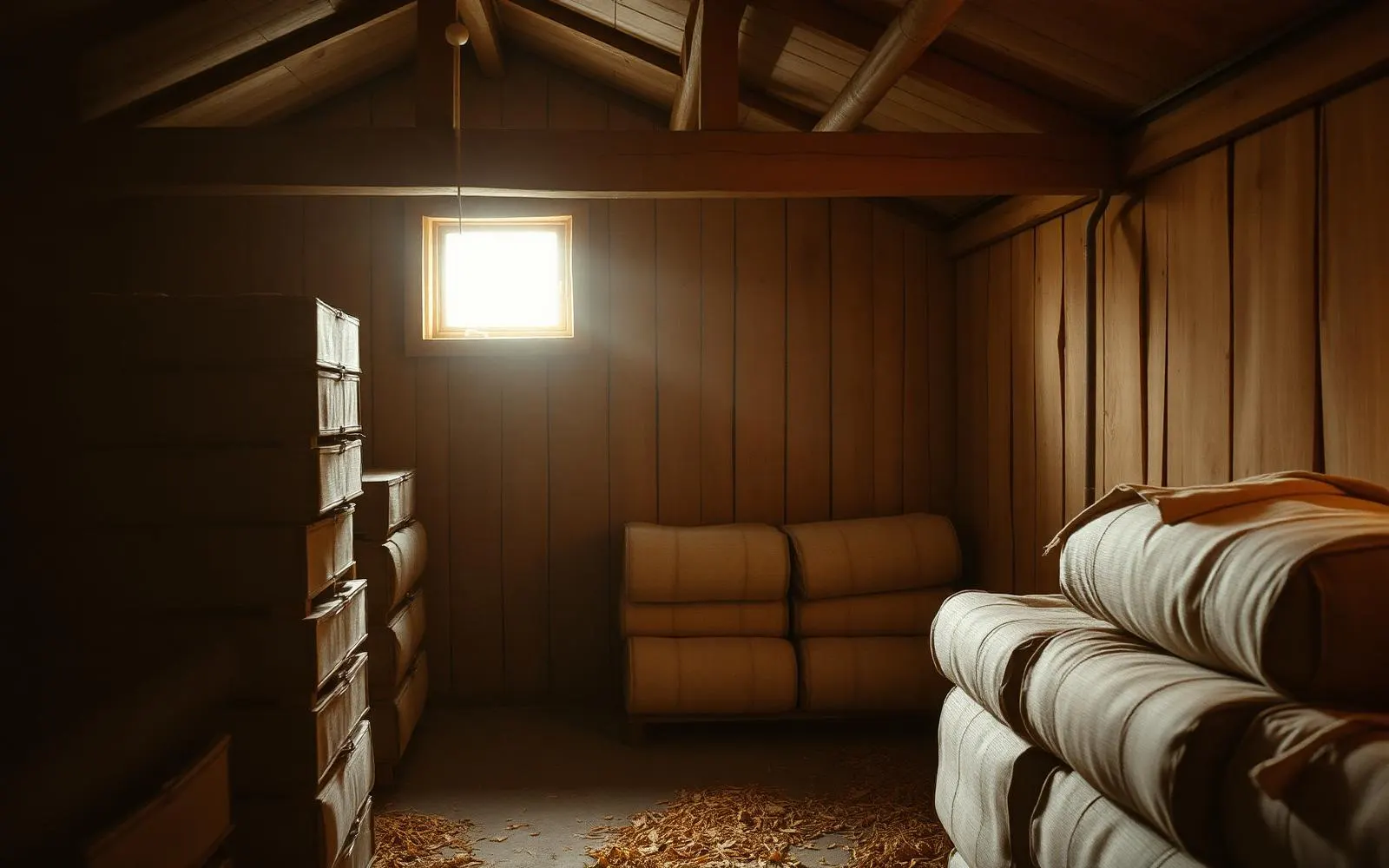
Fermentation takes place traditionally in Payerne in the canton of Vaud - the historical processing site of Swiss tobacco.
04
18 months - why so long?
Industrial tobacco manufacturers often shorten fermentation to a few weeks. Heimat lets every leaf mature for at least 18 months. The difference can be tasted.
The rule of thumb is simple: the longer tobacco ferments, the milder, rounder and more balanced it becomes. Harshness, throat irritation and ammonia notes need time to break down completely. Four to six weeks of fermentation is enough to make tobacco smokable. It is not enough to make it round.
At Heimat the tobacco bales rest for at least 18 months in Payerne. During this time they are opened, inspected, turned and restacked several times. The total processing time from field to finished batch is more than two years - from planting in May to packaging in the manufactory on Lake Constance.
This patience is economically expensive. Storage space, tied-up capital and repeated manual work cost money. Anyone wanting to sell tobacco as quickly as possible cannot afford it. That is exactly why long natural fermentation has largely disappeared from industry.
Heimat ferments every tobacco for at least 18 months - three times longer than the industrial norm.
05
Industrial versus natural fermentation
The global tobacco industry has radically accelerated the maturation process in recent decades - with heat, pressure and chemical help.
In industrial facilities tobacco is now often fermented in heated maturation chambers under elevated temperature and controlled humidity. What would naturally take months is shortened to a few weeks. In addition casings are used - moist mixtures of sugar, glycerin, flavourings and sometimes ammonia compounds that season the tobacco evenly and make it consumable.
The result is a tobacco that is quickly available, consistent in flavour and cheap to produce. What is lost in the process is the natural character of the leaf - every tobacco eventually tastes similar because the casing recipe masks the differences between varieties, regions and vintages.
At Heimat there is no casing, no artificial flavours, no accelerated fermentation. What we process is Swiss tobacco leaf, Alpine spring water and time. Nothing else. That makes the tobacco more expensive, less uniform and unmistakable - one batch tastes different from the next, every vintage has its own character.
Industrial fermentation takes weeks. Natural fermentation takes years.
06
How fermentation changes flavour
Long fermentation does not only soften harshness. It creates the aromas we recognise as the taste of mature tobacco.
During fermentation hundreds of new aroma compounds appear - particularly esters, aldehydes and sulphur-organic compounds. They are responsible for notes of honey, hay, nut, leather, dark cocoa or dried fruit. This depth makes the difference between a tobacco with character and a flat industrial tobacco.
At the same time negative aromas disappear: the grassy edge of the freshly cured leaf, the sharpness of pyridines, the scratch of ammonia. What remains is a round, mild base note with clearly recognisable varietal character - nutty and earthy in Burley, honey-sweet and warm in Virginia.
Swiss tobacco has, due to its cool climate and shorter growing season, a naturally brighter, herbaceous character. Long fermentation works this character out rather than masking it. The result is a tobacco that does not taste of industry but of what it is: a Swiss agricultural product from the Broye Valley.
Fermentation does not just remove harshness. It creates the aromas that make good tobacco.
07
Fermentation at Heimat today
Heimat is one of very few manufactories in Europe still consistently using traditional fermentation - no casing, no acceleration, no shortcut.
Every batch of Heimat tobacco follows the same path: hand harvest in late summer, curing at the farm, transport to Payerne, stacking into bales, at least 18 months of maturation with regular inspection. Only then is the tobacco destemmed, cut and handed over to the manufactory in Steinach on Lake Constance.
This consistency is unusual. The global tobacco industry has long abandoned long natural fermentation for cost reasons. Heimat keeps it because it makes the decisive difference in the end product - in mildness, in flavour depth, in smoothness.
Anyone smoking Heimat smokes tobacco that has had 18 months to find itself. No additives, no acceleration. Only leaf, Alpine spring water and time.
No additives, no acceleration. Only leaf, Alpine spring water and time.
Frequently asked
Tobacco fermentation in detail
Tobacco fermentation is a slow, enzymatically and microbially driven maturation process during which bitter compounds, ammonia and acids in the dried tobacco leaf are broken down. Only through fermentation does tobacco become mild, aromatic and smokable.
Heimat ferments all tobacco for at least 18 months in Payerne in the canton of Vaud. That is about three times longer than is common in industrial tobacco production.
Fermentation takes place centrally in Payerne in the canton of Vaud - the traditional processing site of Swiss tobacco on the edge of the Broye Valley.
Enzymes and microorganisms break down proteins, starch and ammonia compounds. The temperature inside the tobacco bale rises to 45 to 55 degrees Celsius. Bitter compounds and harshness disappear, new aroma compounds such as esters and aldehydes emerge.
Natural fermentation takes months to years and requires no additives. Industrial fermentation is shortened to weeks in heated chambers and usually combined with casings - sugar, glycerin and flavourings. Heimat uses no casings and no accelerated maturation.
Short fermentation is enough to make tobacco smokable, but not enough to make it mild and round. Only long maturation fully breaks down ammonia, harshness and bitter compounds and develops the typical flavour depth.
Slightly. During fermentation part of the nitrogen compounds are transformed and nicotine content drops a little. The much larger effect lies in the breakdown of ammonia, harshness and bitter compounds.
For cost reasons. 18 months of storage ties up capital, requires space and repeated manual work. Anyone wanting to produce tobacco as cheaply and quickly as possible cannot afford it. Heimat deliberately keeps the practice because the difference in the end product is clearly recognisable.